Deep Learning: Exploring the Differences and Advancements

Deep learning and machine learning are two closely related technologies that have revolutionized the field of artificial intelligence (AI) and data analysis. While both techniques share the goal of recognizing patterns and making predictions, they differ in their approach, data requirements, and level of automation. In this article, we will delve into the nuances of deep learning and how it distinguishes itself from classical machine learning. We will also explore the advancements in deep learning technology, its applications, and the implications it has on society.
What is Machine Learning?
Machine learning, as the name suggests, is the process of training a machine to learn from data and make accurate predictions or classifications. It relies on structured and labelled datasets where specific features are defined and organised into tables. These features serve as the input for the machine learning model, which then uses various algorithms to uncover patterns and relationships within the data. By analysing these patterns, the model can make predictions on new, unseen data.
While machine learning can handle both structured and unstructured data, the latter often requires pre-processing to organize it into a structured format. This pre-processing step involves feature engineering, where human experts manually establish a hierarchy of features based on their domain knowledge. For example, if we were categorizing photos of pets, a human expert would need to identify the important features, such as ears or tail, to distinguish between different animals.
Supervised learning, unsupervised learning, and reinforcement learning are the three main types of learning in machine learning. Supervised learning relies on labeled datasets, where the input data is correctly classified or categorized. The model gains knowledge from these labeled examples and is able to predict outputs for fresh, unforeseen data. Unsupervised learning, on the other hand, does not require labeled datasets. Instead, it detects patterns and clusters the data based on its inherent characteristics. Reinforcement learning is a process where a model learns to perform actions in an environment based on feedback, with the goal of maximizing the reward.
The Rise of Deep Learning
Deep learning, a subset of machine learning, takes a different approach to learning and feature extraction. It eliminates the need for extensive data pre-processing and feature engineering by automating the process of feature extraction. Deep learning algorithms can ingest and process unstructured data, such as text and images, without the intervention of human experts. This ability to handle unstructured data sets deep learning apart from classical machine learning techniques.
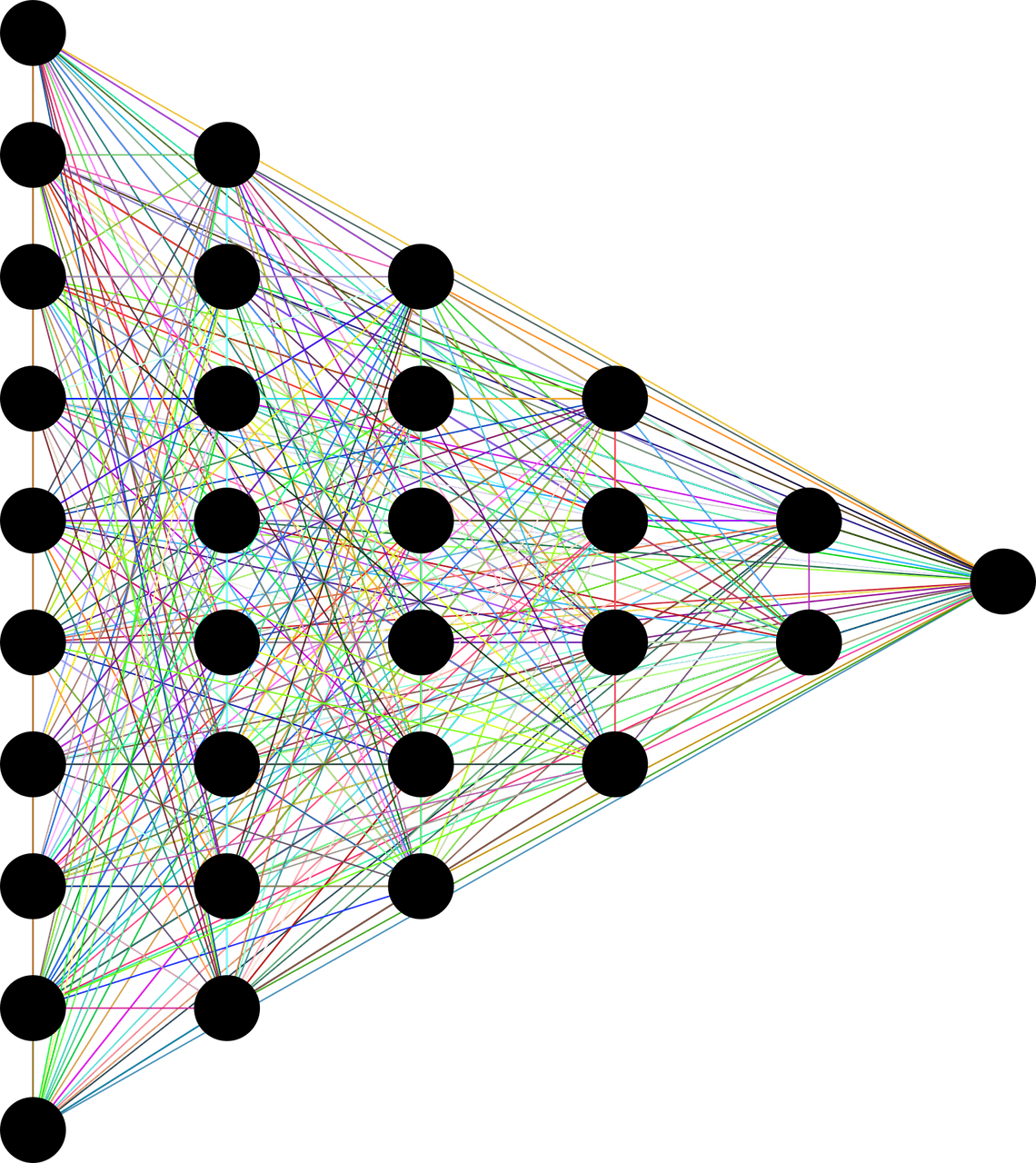
At the heart of deep learning are artificial neural networks, which aim to mimic the way humans think and learn. These networks consist of multiple layers, with each layer performing complex operations to extract meaningful representations and abstractions from the data. The layers in deep neural networks enable the model to understand and make sense of images, sound, and text, making it suitable for a wide range of tasks, including image classification, language translation, and speech recognition.
One of the significant advancements that have propelled deep learning forward is the availability of large datasets and improved computing power. Deep learning models require a considerable amount of data to train effectively. And with the advent of big data analytics, it has become possible to access vast amounts of data, enabling the training of more sophisticated deep neural networks. This increased complexity allows computers to observe, learn, and react to complex situations faster than humans.
What are the Differences Between Deep Learning and Machine Learning?
While deep learning and machine learning share the common goal of learning from data, they differ in several fundamental aspects. Here are the key differences between the two:
Data Requirements: Machine learning algorithms rely on structured and labeled data, while deep learning algorithms can handle unstructured data without the need for extensive pre-processing.
Feature Extraction: In machine learning, feature engineering is performed by human experts. Deep learning automates this process, allowing the algorithm to learn and extract relevant features from the data.
Learning Capabilities: Deep learning models can perform more complex tasks, such as image and speech recognition, due to their ability to understand and interpret unstructured data. Machine learning models are limited to tasks that rely on structured and labeled data.
Training Time and Resources: Deep learning models typically require more training time and computational resources due to their increased complexity and the larger datasets they operate on. Machine learning models can often be trained more quickly with smaller datasets.
Interpretability: Machine learning models are often more interpretable, meaning that it is easier to understand and explain how the model arrived at a particular prediction. Deep learning models, on the other hand, are often referred to as "black boxes" due to their complex internal workings, making it challenging to interpret their decision-making process.
Applications: Machine learning is widely used in various domains, including finance, healthcare, and marketing. Deep learning has shown remarkable success in image and speech recognition, natural language processing, and autonomous driving, among other fields.
Now you can clearely see that deep learning offers unique capabilities that have propelled it to the forefront of AI research and applications.
What Are the Applications of Deep Learning?
Numerous industries have been transformed by deep learning applications, which also make it possible to find creative solutions to challenging issues. Here are a few prominent uses of deep learning:
Image Recognition and Computer Vision: Deep learning has revolutionized image recognition and computer vision tasks. By training deep neural networks on large datasets of labeled images, models can accurately identify objects, people, and scenes in images and videos. This technology has been widely adopted in autonomous vehicles, surveillance systems, and medical imaging, among other applications.
Natural Language Processing: Natural language processing (NLP) involves the interaction between computers and human language. Deep learning models, such as recurrent neural networks (RNNs) and transformers, have significantly advanced the field of NLP. These models can understand and generate human-like text, perform sentiment analysis, language translation, and even engage in intelligent conversations.
Speech Recognition: Deep learning has played a crucial role in improving speech recognition systems, enabling accurate transcription of spoken words and commands. Speech recognition technology is widely used in voice assistants, such as Amazon Alexa and Apple Siri, as well as in call center automation and transcription services.
Healthcare and Medicine: Deep learning has the potential to revolutionize healthcare and medicine by assisting in disease diagnosis, drug discovery, and personalized treatment plans. Deep learning models can analyze medical images, such as X-rays and MRIs, to detect abnormalities and assist radiologists in making accurate diagnoses. Additionally, deep learning algorithms can analyze large volumes of medical research data to identify patterns and trends that can aid in drug discovery and treatment development.
Autonomous Driving: Deep learning has played a significant role in advancing autonomous driving technology. Through the use of deep neural networks, self-driving cars can perceive and interpret their surroundings, making informed decisions in real-time to navigate safely on the roads. Deep learning algorithms analyze data from sensors, such as cameras and lidar, to recognize objects, detect road signs, and predict the behavior of other vehicles.
Ethical and Social Implications of Deep Learning
As deep learning continues to advance and permeate various aspects of society, it raises important ethical and social considerations. Here are some key implications to be aware of:
Limited Ability to Detect Infused Technology:Deep learning algorithms are often incorporated into existing technologies, making it difficult for customers to detect and evaluate the existence of AI. This lack of transparency may have unforeseen consequences and raise ethical concerns.
Conflicts of Interest: Deep learning providers may face conflicts of interest, as consumer goals and supplier goals may not always align.
Power Shift and Accumulated Advantage: The infusion of deep learning technology can lead to a power shift in the technological landscape. Larger technology companies, with their extensive user bases, have an advantage in harnessing the benefits of deep learning. This accumulated advantage can create barriers for new companies to compete, potentially limiting innovation and diversity in the field.
In conclusion, deep learning has emerged as a transformative technology within the field of artificial intelligence. Its ability to automate feature extraction and handle unstructured data has revolutionized various domains, including image recognition, natural language processing, and healthcare. However, the widespread adoption of deep learning also raises ethical and social implications that must be carefully addressed. With continued research and responsible implementation, deep learning has the potential to drive innovation and advancements in AI while ensuring ethical and inclusive development.